

The Nostalgic Memory of the Midfield Enforcer
Cast your mind back twenty years, and European football’s deepest midfield role was defined by grit, hostility, and defensive containment.
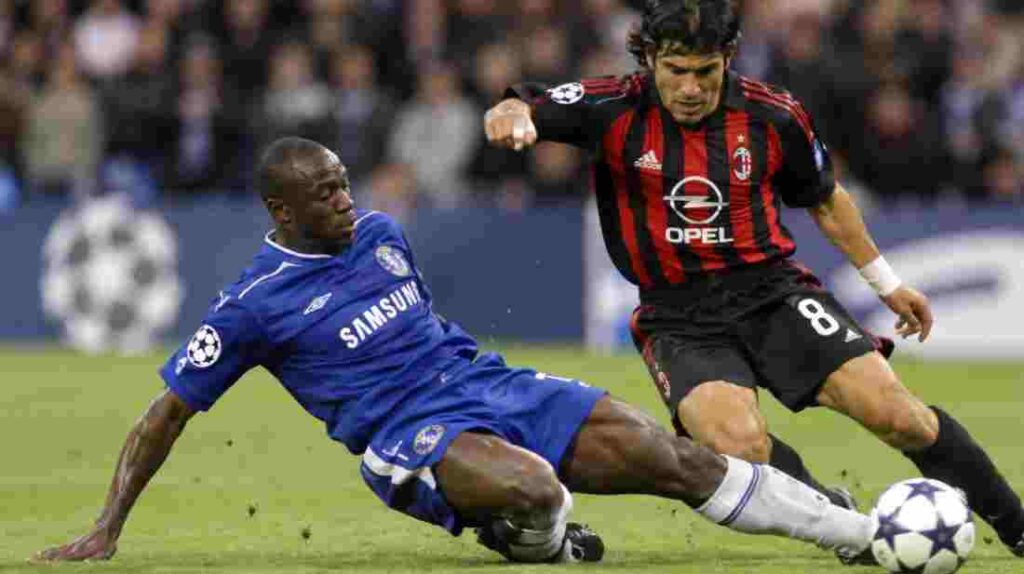
Supporters remember Claude Makélélé patrolling the Stamford Bridge pitch with unblinking positional discipline, Gennaro Gattuso snarling into challenges for AC Milan, and Roy Keane enforcing psychological and physical dominance at Manchester United. Their tactical directive was unapologetically single-minded: win the ball, absorb the hit, disrupt the opponent’s counter, lay the pass off to the nearest creative player, and reset the defensive shield.
At the turn of the century, this one-dimensional destroyer was considered the bedrock of any championship-winning squad. Today, that archetype has practically vanished from elite European football.
The position hasn’t merely evolved; it has undergone a total tactical metamorphosis. The modern defensive anchor is no longer an isolated specialist brought on to destroy plays. They have become the strategic central nervous system, the primary tempo-setter, and the most tactically demanding role in modern football.
The Pressing Traps That Killed the Pure Ball-Winner
The extinction of the traditional midfield destroyer was not accidental; it was forced by the rapid rise of sophisticated pressing systems.
The Vulnerability of the Limited Passer
In the late 1990s and 2000s, opposition teams routinely allowed defensive midfielders comfortable time on the ball, choosing instead to mark creative playmakers like Zinedine Zidane, Rui Costa, or Juan Román Riquelme out of the match. Enforcers were rarely pressed because they posed little direct creative threat.
Everything changed when modern managers revolutionized counter-pressing (Gegenpressing) and coordinated zonal traps. Analysts and opposition coaches realized that if you leave a traditional destroyer open while cutting off his short options, you can bait the ball into his feet and instantly trigger a violent, multi-player press.
Lacking 360-degree peripheral vision and technical agility on the half-turn, old-school enforcers crumbled under targeted pressure. Teams repeatedly coughed up possession in the most dangerous area of the pitch—thirty yards directly in front of their own goal. The modern game suddenly demanded that anyone receiving possession at the base of the midfield must possess elite composure and press resistance.
Territorial Compression and Vanishing Space
As defensive blocks became more compact, the distance between a team’s forward line and its defensive pairing shrank from forty yards to less than twenty-five. In such congested corridors, the luxury of fielding a defensive specialist who contributed nothing with the ball disappeared.
If your deepest midfielder requires three touches to control and face forward, your entire team’s build-up phase grinds to an immediate halt.
The Paradigm Shift: Geometry, Space, and the Regista
The revolution began in Italy and reached systemic perfection in Catalonia, permanently altering what managers expected from the base of their midfield.
The Lessons of Pirlo and Busquets
Carlo Ancelotti’s deployment of Andrea Pirlo as a deep-lying playmaker (regista) proved that deep midfielders could govern games through vision rather than physical combat. But it was Pep Guardiola’s integration of Sergio Busquets at FC Barcelona that cemented the blueprint for the modern single pivot.
Busquets rarely sprinted into dramatic slide tackles, nor did he possess blistering speed. Instead, he controlled the pitch through anticipatory positioning, triangle passing structures, and micro-movements.
He defended with his brain: stepping into passing channels two seconds before an opponent struck the ball, using disguised body feints to eliminate pressing attackers, and recycling possession before danger could materialize.
Operating on the Half-Turn
The foundational technical skill of the modern pivot is the ability to receive possession on the “half-turn.”
When collecting the ball from his centre-backs with his back to goal, an elite pivot does not merely bounce it backward. He shapes his hips to scan both shoulders, takes his first touch toward the opposition’s goal, and instantly breaks the first line of the opponent’s pressing structure. This single technical action collapses the opponent’s defensive game plan, creating immediate transitions into attacking overloads.
The Modern Hybrid: Physical Dominance Meets High-IQ Orchestration
Today, football has evolved beyond the dichotomy of choosing between a pure destroyer and a frail technician. The modern elite pivot must be a complete hybrid.
Master of the Rest Defense
Elite modern sides spend long stretches of matches attacking deep inside the opponent’s territory. In these phases, the primary responsibility of the defensive midfielder is managing what tactical coaches call the “rest defense.”
While their teammates circulate the ball around the opposition’s penalty box, the pivot sits just outside the final third. Their job is to read clearance trajectories, position themselves in the path of anticipated counter-attacks, and immediately choke off transitions before they develop into threatening breaks. They act as the tactical shock absorber that allows ultra-attacking systems to function without collapsing.
Line-Breaking Passing and Ball Progression
A modern number six cannot simply make sideways passes. To be world-class, they must consistently deliver progressive passes:
- The Low-Drive Diagonal: Cutting through two banks of defenders into the feet of an inverted winger or attacking midfielder operating in the half-spaces.
- The Long Switch: Bypassing packed central channels with precision cross-field switches to isolate wingers in 1-on-1 situations out wide.
- The Progressive Carry: Driving through midfield vacancies when opponents drop off to cover passing lanes, forcing an opposing defender to step out of shape.
The Ripple Effect on Match Expectations and Tactical Balance
Because the modern pivot carries such enormous tactical weight, their availability dictates a team’s absolute floor and ceiling.
The Cost of an Absent Anchor
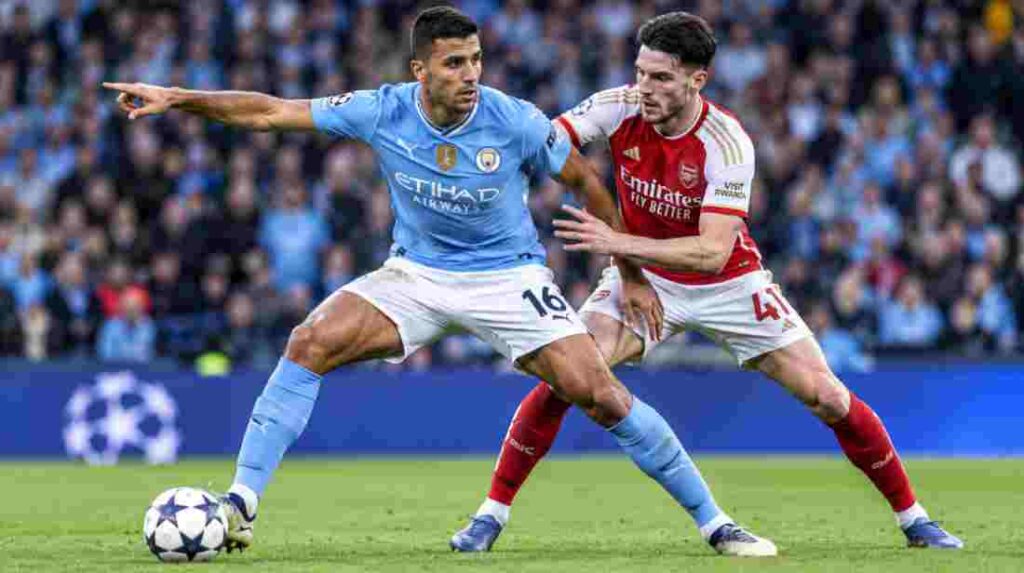
When teams like Manchester City or Arsenal lose their primary defensive anchors—such as Rodri or Declan Rice—they do not merely lose a solid individual performer; their entire structural stability fractures.
Without their primary conductor, build-up play slows down, turnovers in transition multiply, and the backline is exposed to direct, unshielded counter-attacks. Modern tactical data reveals that elite teams suffer a dramatic drop in expected goal difference (xGD) and win percentage when their starting pivot is sidelined.
Assessing Tactical Lineup Mismatches
For football analysts, supporters, and match forecasters, understanding the role of the pivot is essential when evaluating pre-match matchups.
When fans review upcoming fixtures, compare tactical previews, and examine analytical projections or tỷ lệ cá cược to evaluate how market expectations shift before kickoff, line-up changes at the base of the midfield often tell the truest story.
A high-pressing team facing an opponent forced to deploy a backup, press-susceptible defensive midfielder is one of the most reliable indicators of an impending tactical breakdown. If a team cannot cleanly escape the first third through its pivot, their attackers are starved of service, and their defense inevitably concedes high-danger turnovers.
The Most Demanding Shirt on the Modern Pitch
The romantic image of the blood-stained enforcer will always hold a special place in football folklore. But contemporary football has evolved past the age of the specialized destroyer.
The modern defensive midfielder must be everything at once: the defensive wall that shields the backline, the press-resistant outlet that bails out the goalkeeper, the tactical brain that governs rest defense, and the primary conductor who dictates the rhythm of ninety minutes.
In an era of hyper-athleticism and suffocating tactical structures, the team that controls the pivot controls the game.